Every day, cards are used for work, joy, identity or as gifts. Cards have always played a big part in both personal and corporate communication whether it is to share contact information during a meeting or to wish someone a happy birthday. Print cards are still in fashion but digital technology has provided us to better solutions which make communicating information much faster and easier.
Today, organisations and professionals are shifting towards modern solutions like digital business card and nfc business card, but classic Business Cards, Visiting Cards, Greeting Cards, ID Cards and Gift Cards continue to serve their own unique role.
In this thorough guide, we will cover the many sorts of Cards, their applications, benefits and how to choose the best one in 2026.
What Are Cards?
Cards are little items, printed or digital, used to convey information, express feelings, confirm identity, or have worth. Depending on their use, they are available in a range of sizes, materials and forms.
Some cards allow professionals to create commercial contacts, other are used for personal celebrations, employee identification or shopping.
Technology is growing and many classic Cards have their digital equivalents, which offer more convenience and smarter networking.
Why Cards Are Still Important
Cards still have a valuable purpose in a digital age. They give immediate information and they create a lasting impression.
People do remember the companies who hand out a well-designed card. Greeting cards are saved by families for memories. Companies use ID cards for security. Gift cards are a way retailers drive sales.
Whatever your aim, the proper Cards will make it easier and more meaningful to communicate.
Different Types of Cards
There are many different sorts of Cards, each made for a unique requirement.
1. Business Cards
Business Cards are one of the most popular networking tools. They normally have your name, company, phone number, email, website and social media links.
Professionals utilise Business Cards at meetings, trade exhibitions, conferences and networking events.
Many companies today also use QR codes or NFC technologies to make communicating contact details even easier.
Best For
- Business owners
- Sales professionals
- Freelancers
- Consultants
- Entrepreneurs
2. Visiting Cards
The names Visiting Cards and Business Cards are used interchangeably by many individuals. A Visiting Card is a simple way to provide contact details of a personal or business nature.
They are often used by doctors, lawyers, estate agents, teachers and local businesses.
Modern visiting cards may also contain QR codes for saving contact details instantaneously.
3. Greeting Cards
Greeting Cards assist people to convey their emotions on important occasions.
They are often used for:
- Birthdays
- Weddings
- Festivals
- Anniversaries
- Thank You messages
- Congratulations
- Holidays
Printed and digital Greeting Cards are still popular as they create a personal connection.
4. Digital Business Card
A digital business card is an intelligent version of a regular card. Rather than handing out paper, you just share your profile by QR code, link or NFC tap.
Unlike a physical card that you need to produce every time you make a change, a digital business card may be updated at any moment.
It may contain:
- Contact information
- Company details
- Website
- Portfolio
- Social media
- Payment links
- Maps
- Videos
Now, a digital business card has become a popular choice for many professionals as it saves time and printing costs.
5. NFC Business Card
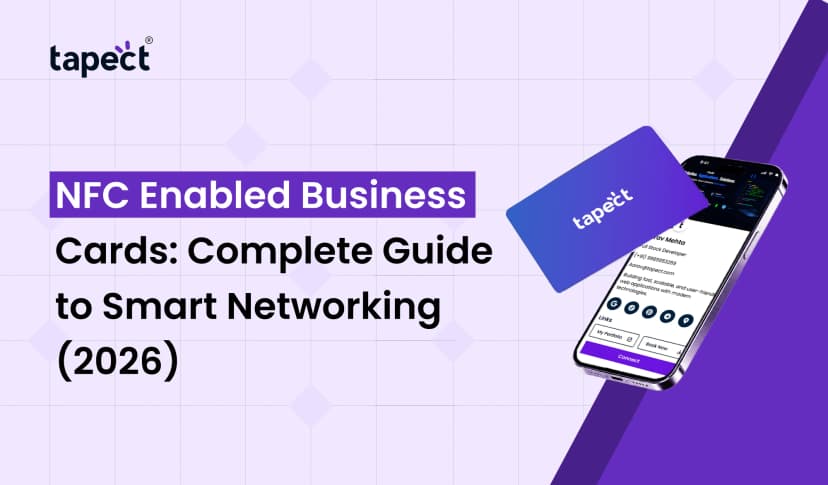
One of the newest inventions in networking is the nfc business card.
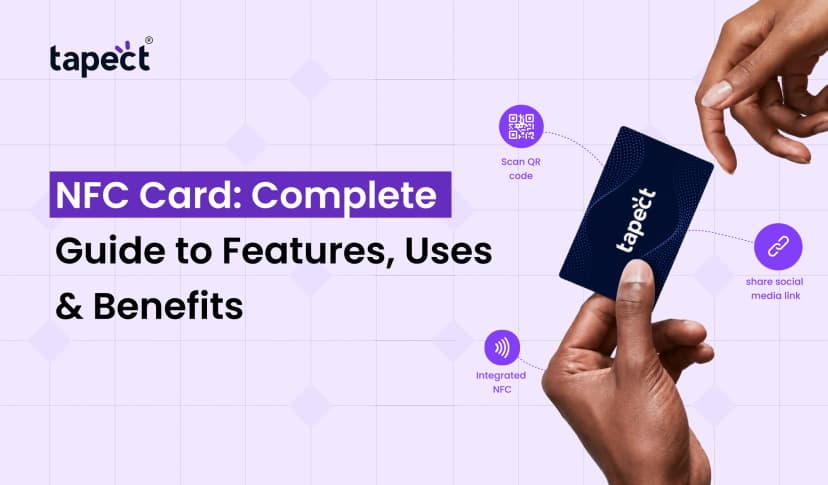
Users are able to transmit information instantaneously by tapping their card on a compatible smartphone, using Near Field Communication technology.
There’s no typing and no app needed in most circumstances.
Advantages of a nfc business card include:
- Faster networking
- Contactless sharing
- Premium appearance
- Easy profile updates
- Eco-friendly solution
Tapect and other companies offer clever NFC solutions that help professionals make better first impressions.
6. ID Cards
Organisations, schools, hospitals and workplaces utilise ID Cards to identify people.
They are generally:
Employee photo Name ID number Department Company logo
Many ID Cards additionally have barcodes, QR codes or NFC chips for access control and timekeeping.
7. Gift Cards
Gift Cards are one of the most popular gift options since it allows the receiver to pick what they want.
Gift Cards are available in both physical and digital formats at retail businesses, restaurants, internet shops and entertainment brands.
Businesses also utilise Gift Cards as promotional gifts and incentives for customer loyalty.
Printed Cards vs Digital Cards
Printed and digital Cards each have their benefits.
Printed Cards
- Easy to hand over
- Professional appearance
- No internet required
- Great for face-to-face meetings
Digital Cards
- Easy to update
- Eco-friendly
- Instant sharing
- Unlimited information
- Better engagement
For the greatest experience many professionals now pair a printed Business Card with a digital one.
Benefits of Using Cards
All increase communication, but each Card has various benefits.
Improved Networking
Professional Business Cards help people remember you after you meet, and after events.
Strong Brand Image
Well-designed Cards make your firm appear more professional.
Easy Information Sharing
Digital business card solutions today enable users to share their whole profiles in seconds.
Cost Effective
Printed cards need to be reprinted after every update, while digital cards merely need modifications to the profile.
Eco-Friendly
This reduces waste and is a sustainable business approach using fewer paper cards.
Improved Customer Experience
Add QR codes or NFC technologies to make it easier for your customers to connect with your business.
How to Choose the Right Cards
Every card is not right for every scenario.
When deciding on your Cards, think on these factors.
Purpose
Networking, gift giving, finding workers or marketing your business?
Design
Keep the layout clean and readable.
Material
Choose paper, plastic, metal or wood, depending on your brand image.
Technology
If you want intelligent networking, use a digital business card or NFC business card.
Budget
Work out the right balance of quality and pricing for you.
Tips for Designing Professional Cards
Good design lets your Cards stand out more.
- Use high-quality fonts.
- Keep enough white space.
- Add your logo.
- Include only important information.
- Choose brand colors.
- Add a QR code when possible.
- Make sure contact details are accurate.
- Keep the design clean and modern.
Simple designs make a big impact.
Common Mistakes to Avoid
So many people make the simple error of letting their Cards lose impact.
Don’t have these problems:
- Overloading information
- In very small fonts
- Bad print quality
- Contact details out of date
- Website or social links missing
- low quality photos
- No call to action
- Refusing digital sharing choices
Keeping your card simple makes it easier to read.
Future of Cards in 2026
Cards: The future of Cards is smarter.
Businesses are migrating to digital solutions while retaining printed cards for face-to-face networking.
Growing features include:
- QR codes
- NFC technology
- Contact Analytics Instant save
- Social Media Integration.
- Online portfolios
- Updates to profiles in the cloud
Traditional and smart Cards combined provide professionals more freedom than ever.
Why Choose Tapect?
Tapect is a smart networking solution for today’s professionals. For today’s professionals looking for a means to network.
Share your information fast and professionally with Tapect, whether you require a premium digital business card, a smart nfc business card or beautiful Business Cards. Tapect is an easy and effective networking with simple updates, contactless sharing, and a professional style.
FAQs
1. What Are cards for?
Cards are used for networking, greetings, identification, marketing, gifting and exchanging information.
2. What is the difference between Visiting Cards and Business Cards?
Business Cards are used for professional branding and Visiting Cards are commonly utilised for personal or local business networking. Both provide contact information.
3. What is a digital card?
A digital business card is an online version of a business card that you may distribute via a QR code, a link or NFC technology.
4. How does NFC business card work?
An nfc business card using Near Field Communication technology. Users merely tap the card to a connected smartphone to instantly share contact details.
5. Are greeting cards still in demand?
Yeah. Greeting Cards remain a suitable way to celebrate birthdays, holidays, weddings, anniversaries and other important occasions.
6. Why do you need an ID Card?
ID Cards are used to enhance employee identification, workplace security, attendance management and access control.
7. Do Gift Cards help businesses?
Yes. Gift Cards have been proven to enhance sales, bring in new consumers and encourage repeat business .
Conclusion
Cards are still a crucial part of personal and professional communication in 2026, from classic Business Cards and Visiting Cards to smart digital business card and nfc business card solutions.
Greeting Cards, ID Cards for identifying your personnel, Gift Cards to reward your customers or simply networking smartly to build your business, a perfect card may make the best impression. By selecting the proper font and keeping the design basic, functional and modern, you can build better relationships and display your brand with pride.
Staying ahead in company and for professionals is a step to better networking and long term growth using traditional cards with smart solutions from Tapect.
Call to Action
Want to improve your connection with customers and professionals? Tapect provides high quality Business Cards, smart digital business card solutions and innovative nfc business card options for modern networking needs. Tapect helps you to build better contacts, communicate your information promptly and make a memorable impact.
 7/31/2026
 Guides